As a therapist, I spend a lot of time talking with people about regulating their nervous systems.
We talk about breathing, boundaries, sleep, movement, nutrition, thought habits, and self-compassion. I try to be a therapist who walks my talk. I have daily practices of self care. I focus my continuing education trainings on the latest research with nervous system regulation.
I hope you won’t find it surprising that many therapists also work on their own mental health. I’m no exception, and no stranger to anxiety. I also understand well the detrimental impact, and addictive risk, to our constant exposure to media on our personal devices.
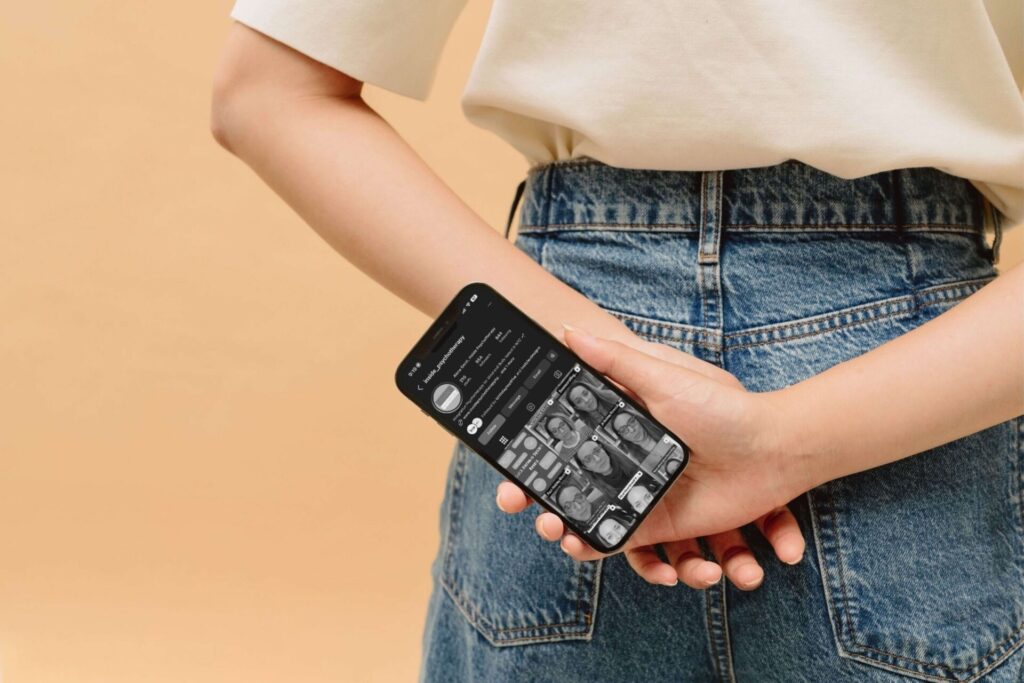
I’ve read articles about changing phone settings to grayscale. And when a client recently mused about trying that as a deterrence from constantly picking up their phone, I offered to try it myself for a week in solidarity.
It was depressing!
I don’t mean that I became clinically depressed. But I absolutely realized, each time I picked up my phone for information, to look something up, out of boredom, that when I saw the lack of color, I viscerally felt a kind of disappointment. I wasn’t getting the kind of dopamine reward that I’d become accustomed to with the bright, flashy colors.
I do stay up to date on current events, and our chaotic and dangerous political climate. But now I do so more intentionally, and designated times to check my preferred news platforms and podcasts, rather than just picking up my phone and looking during any lull in activity. And yes, along with my clients, I feel anxious about what’s happening around us too.
Over the course of the week with my phone on grayscale, this feeling of let-down genuinely surprised me. And even moreso when I started to notice that I just turned to my phone less for stimulation when I felt bored or understimulated.
In just a few days’ time, I also sensed a noticeable reduction in my own anxiety.
The Power of Color
At first, it sounded almost silly. Could removing color from my phone really make a difference when anxiety feels so big, so global, so tied to real stressors? But anxiety doesn’t only live in our thoughts—it lives in our nervous systems. And our nervous systems are constantly being stimulated, often without our awareness.
Color is stimulating by design. App developers know this. Reds trigger urgency. Blues signal trust. Bright, saturated colors are meant to pull us in, keep us scrolling, keep us engaged. When you’re already prone to anxiety, that constant visual stimulation keeps your body in a low-grade state of alert. Even when you use scrolling to “relax,” your nervous system is still working.
When I switched my phone to grayscale, my phone instantly became less enticing. Less sticky. Less urgent. I stopped reaching for it reflexively in the same way. I still used it when I needed to—but the mindless, anxious scrolling lost its grip.
Where Anxiety Thrives
From a clinical lens, this makes sense. Anxiety thrives on constant input and perceived urgency. Grayscale reduces both. Without color cues, your brain has fewer signals telling it, “Pay attention now.” The result is subtle, but powerful: fewer micro-spikes of stress throughout the day.
I noticed my body settling in ways I hadn’t expected. My shoulders felt less tense. My jaw unclenched more often. I was less likely to spiral after reading the news or opening social media. Not because the content disappeared—but because it no longer hijacked my nervous system in the same way.
This matters especially right now.
Many of us are living with background anxiety tied to current events, parenting stress, work instability, and ongoing uncertainty. For parents—particularly parents of neurodivergent children—our phones often feel like lifelines. We’re researching, advocating, coordinating, staying informed. The problem isn’t the phone itself. It’s the constant state of activation it can create.
Grayscale doesn’t ask you to disconnect from the world. It simply changes the way your body experiences it.
What I often tell clients is this: anxiety management isn’t about removing stress—it’s about reducing unnecessary stimulation so your nervous system has more capacity to cope with the stress that actually matters.
Anxiety is cumulative
Grayscale is one of those small, practical shifts that works with your biology, not against it.
And no, it doesn’t fix everything. You’ll still feel anxious sometimes. You’ll still worry. You’ll still have hard days. But anxiety is cumulative. When you lower the volume in small ways, your system has more room to breathe.
As a therapist, I don’t believe in one-size-fits-all solutions. But I do believe in low-effort, high-impact tools that respect how overwhelmed people already are. Turning my phone to grayscale will not cure my anxiety—but it has softened it. And in a world that constantly demands our attention, sometimes softening is a radical act of care.
If your nervous system has been tired lately, this might be a gentle place to start.
And one more note for parents: Recently my tween picked up my phone to show me a youtube channel. As soon as she looked at the screen and was reminded of the grayscale, she gave up and put my phone down, somewhat annoyed. And then we talked about something else.