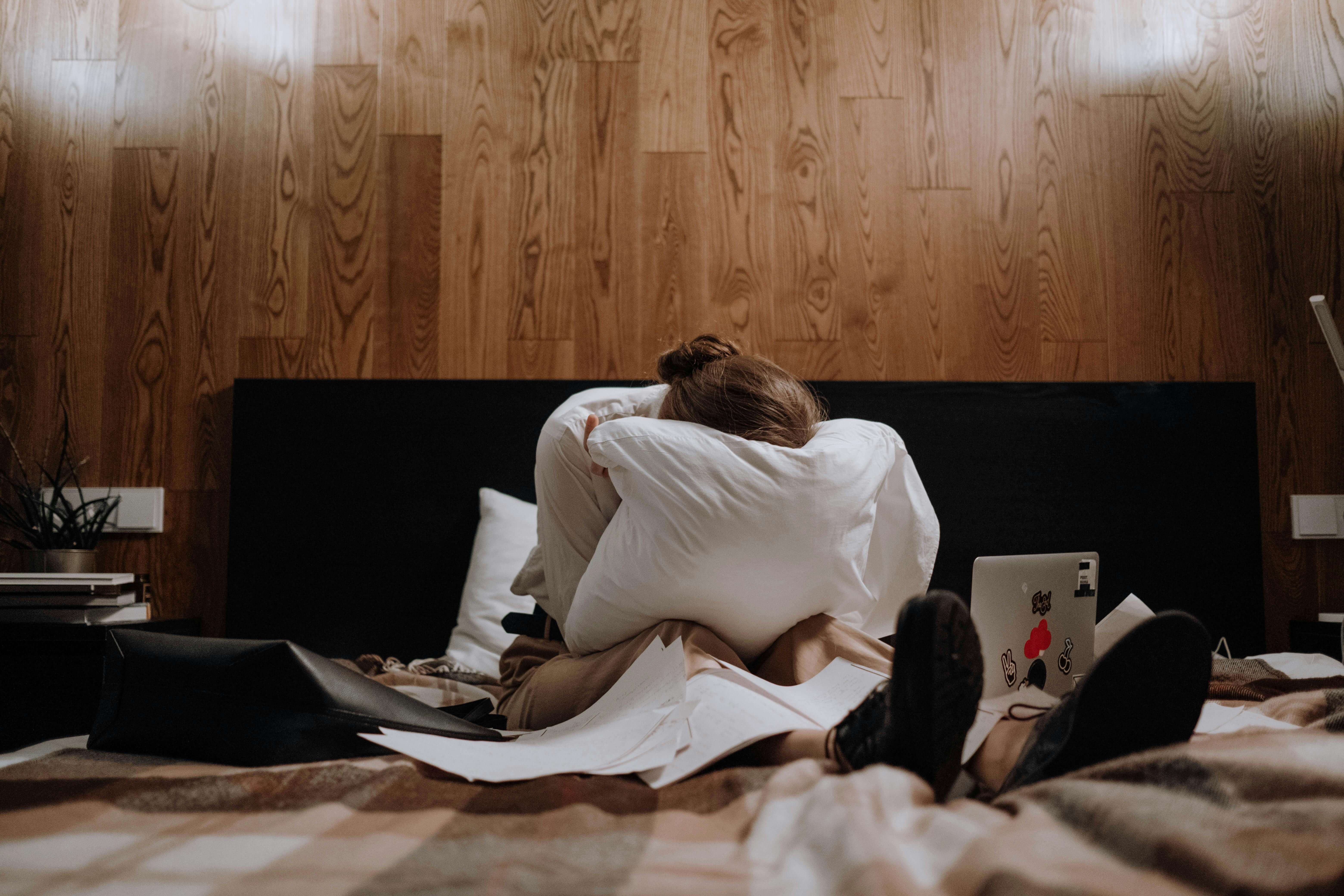
It comes tumbling through the proverbial door without invitation or notice, moreso with a well-meaning but less-than-helpful “I AM HERE!!”
However, there are more persistent forms of anxiety that do not announce their arrival with clarity, but with subtlety. It can begin with symptoms in your body that feel…strange, like a tightening in your chest, a restless, distracting buzzing feeling in your mind, or a wave of thoughts that feel out of your control.
Before you know it, your mind starts racing—running through worst-case scenarios, replaying conversations and cringing, or obsessing over all that could go horribly wrong. Sometimes without you even fully understanding what’s happening, anxiety has taken the wheel.
Anxiety wants you to believe that every fear is a warning you should heed, and every uncomfortable sensation is a threat to your very existence. These challenges can become debilitating over time, and slowly chip away at the things you once loved and enjoyed.
However, you can learn to interrupt this cycle with grounding, compassion, and practices that create space between you and your anxious mind.
One of the most powerful steps you can take is learning to name anxiety in the moment.
When you pause and say to yourself, “This is not me…this is anxiety,” you shift from being inside the anxious spiral to observing it from the outside.
Naming it reduces the fear that something is “wrong” with you. Instead of believing your anxious thoughts, you begin to see that your nervous system is simply doing what it does when it feels overwhelmed or uncertain—it’s trying to protect you. You can even thank your nervous system (if you want) for its well-meaning over-reaction, and remind yourself that even while anxious, you are not in any danger.
Check in with your body.
Anxiety often lives in physical tension long before it shows up in thoughts.
Ask yourself: Where do I feel this in my body?
You might notice a racing heart, heat in your face, tight shoulders, or a knot in your stomach. Gently soften what you can. I like to guide my clients to first check in with their face.
Can you soften the muscles around your eyes and forehead, or in your jaw, even a little bit? That action alone can slow down the amped up feeling anxiety unleashes on you.
Place a hand on your chest and feel yourself breathe, or let your shoulders drop away from your head. You’re signaling to your body: You’re safe enough right now. There’s no need to tense up. This doesn’t make anxiety disappear instantly, but it helps loosen its grip.
Externalize anxious thoughts.
When anxiety takes hold, it convinces you that every possibility needs to be considered immediately. This can mean to the exclusion of all else: working, caring for your family, taking care of yourself, even eating or sleeping!
Writing your anxious thoughts down channels them out of your head and onto paper, where they feel less overwhelming. Once they’re written, ask yourself:
Am I in any danger right now?
Is this within my control?
Is what I’m worrying about really true? Or is it anxiety?
Most of the time, you’ll recognize that anxiety is projecting into the future or worrying about the past; piling possibilities on top of one another.
Seeing this clearly helps you respond with more intention and less urgency.
Tuning in to your senses is another accessible way to interrupt anxiety.
When fear hijacks your mind, come back to your body.
Notice the air blowing in and out through your nose
Personally I like to keep rollerballs of essential oils on my desk. I can put some on my hands or roll the oil on my neck so I can smell something appealing that brings me back to the present. These small acts can pull your nervous system out of the anxious loop and bring you back into the here and now—where fear usually loses its intensity.
Self-compassion is essential, especially when anxiety tells you that you’re “too much,” “irrational,” or “overreacting.”
Instead of criticizing yourself for feeling anxious, try acknowledging the tenderness underneath: “Of course I’m anxious—this matters to me,” or “Anyone would feel overwhelmed right now.”
Anxiety often stems from wanting things to go well, wanting to avoid pain, or caring deeply about outcomes. Treating yourself with gentleness softens the fear and reduces the shame that often comes with anxiety.
Creating a “done for now” ritual when anxiety keeps you stuck in constant vigilance.
Anxiety thrives on the belief that if you stop thinking about something, you’ll lose control or your worst fear will come true.
Closing a notebook, shutting the laptop, putting the phone down, or saying aloud, “I’ve done what I can today,” creates a clear boundary between effort and rest. When your mind tries to drag you back into anxious planning, repeat the phrase: “Done for now.”
You’re reassuring your nervous system that it doesn’t need to stay on high alert.
Movement for anxiety.
A walk, a little stretching, or even shaking out your hands releases the adrenaline and cortisol that fuel anxious thoughts. Because anxiety is a heightened state of arousal, your body needs to release energy before your mind can have a chance to settle down.
We call this “meeting the body where it is.” After a little movement, you may notice that the thoughts that felt urgent before now feel more manageable.
Return to your “why.”
Anxiety pulls you toward fear-driven decisions—avoiding discomfort, predicting outcomes, protecting yourself from imagined futures, or punishing yourself for something that happened in the past.
When you slow down and ask, “What matters most to me right now?” or “What action reflects the person I want to be?” you shift from fear to purpose.
Even small, values-aligned actions can quiet anxiety far more effectively than overthinking.
You will still experience anxiety—it is part of being human, and moreso for some than others. The goal isn’t to vanquish anxiety forever. The goal is to not let anxiety steer your life or shape your decisions.
By naming it, grounding yourself, externalizing your thoughts, creating structure, practicing compassion, and reconnecting with what matters, you can create space between you and your anxious mind.
In that space, you rediscover a sense of choice. And that is where healing begins.